Monday, February 22, 2016

Schiller and Lotte: postcard commemorating a poetic marriage, 1905

Authors' marriages deserve to be a subject of study in their own right, if only because they tended to loom so large in the bourgeois literary histories and biographies of the nineteenth and early twentieth centuries.

The German equivalent to the marriages of Percy Shelley and Mary Wollstonecraft Godwin or Nathaniel Hawthorne and Sophia Peabody is arguably that of Friedrich Schiller and Charlotte von Lengenfeld, often held up (and sentimentalized) as the ideal literary union and model of domesticity.


The third in a series of six postcards depicting the Schiller's life, issued on the centennial of his death in 1905, this one is entitled, "Own Home."
• At right, we see a portrait of "Friedrich Schiller, Professor of History in Jena 1789-1799."
 • At left, "Schiller's spouse Charlotte, née von Lengenfeld. Born 22 Nov. 1766, died 9 July 1826."
The center vignettes depict, respectively, the church in which they were married and their first house:
• Church in Wenigenjena*) Schiller married here 22 February 1790.
• Schiller-house in Bad Lauchstädt*) Betrothal in Lauchstädt 3 August 1789

*) after drawings by Schiller's spouse
It is of course indicative of the time and place that Charlotte is here generally referred to  only as Schiller's wife, and indeed, that the description of the wedding mentions only "Schiller" getting married. Times were indeed different.


Chronicle of a wedding

As for the wedding itself, Gero von Wilpert's Schiller-Chronik, issued in anticipation of the Schiller bicentennial (Stuttgart, 1958) provides a convenient summary of the big day:
February 22. Wedding day. Early with Charlotte and Karoline to Kahla, where the mother-in-law is picked up around 10-11; from there around 2 directly to Wenigenjena (arrival around 5), where around 5:30 the wedding quietly took place under the direction of the Kantian theologian Adjunct G. L. Schmid in the presence of only the mother- and brother-in-law, so as to foil all the attempted surprises on the part of students and professors. Following this, return to Jena, where the evening is spent in tea-drinking and conversation. _-- Frau von Lengenfeld gives the couple a space of their own, but it is not yet an independent household, and rather, just a few additional rented rooms, and they still take their midday meal with Frau Schramm, Lotte employs a maid, Schiller, a manservant. -- The mother-in-law stays another 8 days, Karoline approximately 5 weeks in Jena with Fräulein von Seegner. Apart from that a solitary life, closer association only with Prof. Paulus.

Undivided attention

Because the card dates from 1905 and was thus produced before the major change of 1907, it has no divided back in the fashion to which we are accustomed, i.e. space for the address at right and message at left. The reverse side informs the purchaser, "This side for the address only." People either sent cards without messages--the image alone serving as the greeting--or scrawled them on or around the illustration on the front, as best they could, for example, on this card celebrating Schiller's birthplace of Marbach am Neckar, from 1896:


If you're curious about the postal rates for the wedding card, they were even provided for the writer: "U S, Canada and Mexico 1 c. Foreign 2 c."

That the language is English and currency is American raises another issue: Although most of the Schiller anniversary cards were of course produced in Germany for Germans, not a few emanated from the United States. The publisher's imprint on this one reads, "A. Selige. Pub. Souv. Post Cards. St. Louis." Missouri was one of several centers of German settlement. The firm of Adolph Selige, active from 1900 to 1920, produced mainly cards on western or midwestern themes, so this one was intended for a more specialized audience, thanks to the large population of German immigrants or citizens of German origin. A useful reminder of the ever-evolving definitions of "American" identity and multicultural politics, among other things.


Sunday, February 21, 2016

21 February 1916: The Battle of Verdun Begins

This month's artifact of the moment:

A century ago began one of the fiercest battles of a war that has come to stand for unprecedented slaughter. When the fighting on the western front during the Great War changed from the anticipated war of movement to the unexpected war of position, military leaders on both sides in vain sought a way out of the stalemate.


Operation Judgment

As 1915 drew to a close, German Chief of Staff Erich von Falkenhayn presented a plan to the Kaiser:
The strain on France has reached breaking point--though it is certainly borne with the most remarkable devotion. If we succeed in opening the eyes of her people to the fact that in a military sense they have nothing more to hope for, that breaking point would be reached and England's best sword knocked out of her hand.

A massive assault against the right target would "compel the French to throw in every man they have. If they do so the forces of France will bleed to death."

That target was the fortified area around the Verdun, a city with great symbolic resonance in French history. An ancient Roman fortress, it also lent its name to the treaty that in 843 divided the empire of Charlemagne among his successors. The fall of the fortress during the French Revolutionary Wars in 1792 had exposed Paris to the threat of capture. By contrast, in 1870, it was the last fort to fall to the Germans in the Franco-Prussian War. Despite the presence of new outlying fortifications built in the wake of that defeat, it was weakly defended in 1916: the garrison was small, and its guns had been removed for use on other fronts.

The Germans assembled overwhelming force and began "Operation Gericht" (Judgment) on 21 February with a massive assault. In the words of John Keegan:
Among the 542 heavy guns were thirteen of the 420mm and seventeen of the 305mm howitzers that had devastated the Belgian forts eighteen months earlier, and to supply them and the medium artillery a stock of two and a half million shells had been accumulated. The whole of the French defensive zone on a front of eight miles--one German division and 150 guns to each mile--was to be deluged with preparatory fire, so that 'no line is to remain unbombarded, no possibilities of supply unmolested, nowhere should the enemy feel himself safe.' Falkenhayn's plan was brutally simple. The French, forced to fight in a crucial but narrowly constricted corner of the Western Front, would be compelled to feed reinforcements into a battle of attrition where the material circumstances so favored the Germans that defeat was inevitable. If the French gave up the struggle, they would lose Verdun; if they persisted, they would lose their army.
After early German gains, the French rallied to the defense, desperately resupplying the city via what became known as the "sacred road" (Voie sacrée) and subjecting the German attackers to devastating artillery fire. The fight thus ground on for nearly a year, bleeding both armies rather than merely the defenders. Combined casualty estimates for the two sides range from around 714,000 to 936,000. Finally, in late October, the French recaptured the key fortress of Douaumount, and by mid-December, they completed the counter-offensive.


To "The heroes, known and unknown, both dead and living"

In November, the municipal council of Verdun (meeting in Paris) ordered a medal struck to honor the heroic defenders. Each 37-mm bronze medal came in a small leather pouch stamped with the name of the city and holding a certificate.


The certificate, which depicted the medal and bore the hand-stamped seal of the city, read:
TO THE HIGH CHIEFS,
OFFICERS, SOLDIERS,
TO ALL,
    
     The heroes, known and
unknown, both dead and living,
who have triumphed over the
barbarians' onslaught and im-
mortalised her nam[e] throughout
the world and for ages to come,
the Town of Verdun, inviolate
and standing on her ruins, dedi-
cates this medal in token of her
gratitude.

The obverse of 37-millimeter bronze medal designed by Émile Vernier (1852-1927) depicts a defiant Marianne (symbol of the Republic) wearing a military uniform and the new army helmet, one fist clenched in defiance, the other holding a sword, poised for the offensive. Around the rim is the watchword of the defenders, "They shall not pass."


The obverse depicts the Porte Chaussée of Verdun between palms, with the word "Verdun" above and the starting date of the battle, 21 February 1916, below.
 

This unofficial medal was eventually issued in a variety of forms and sizes for all who had fought in the Verdun sector, broadly defined, at any point during the war.


"sacrifices . . . made in a most promising cause"?

Falkenhayn summarized his achievements:
The enemy nowhere secured any permanent advantages; nowhere could he free himself from the German pressure.  On the other hand, the losses he sustained were very severe.  They were carefully noted and compared with our own which, unhappily, were not light.

The result was that the comparison worked out at something like two and a half to one: that is to say, for two Germans put out of action five Frenchmen had to shed their blood. But deplorable as were the German sacrifices, they were certainly made in a most promising cause.
History has begged to differ. Falkenhayn had to relinquish his position as Chief of Staff, replaced by Paul von Hindenburg, the hero of Tannenberg who would go on to become President of Germany under the Weimar Republic and reluctantly appoint Hitler as Chancellor. And that is not the end of the ironies. Among the French soldiers captured in the battle was a young Charles de Gaulle. His commander was Philippe Pétain, who achieved fame for his defense of Verdun. In 1940, following the fall of Dunkirk, they briefly served together in the war cabinet before becoming archenemies, as Pétain took the reins of the collaborationist Vichy regime, while de Gaulle led the Free French from London.


* * *
Source of quotations:  John Keegan, The First World War (NY: Vintage Books, 1998), 277-86

Friday, February 19, 2016

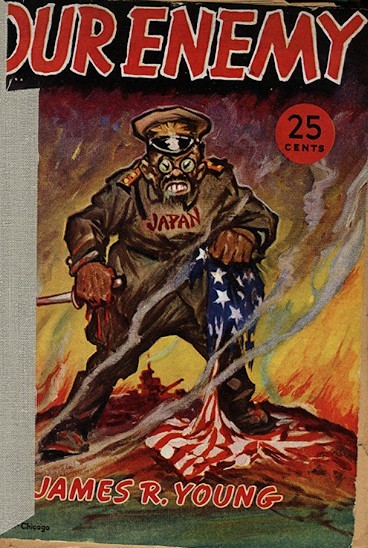
Japanese American Day of Remembrance, 2016 (and unintended consequences)

Serendipity is an interesting thing. As noted in last night's post, a Minneapolis paper just ran an editorial about plans to restore historic early nineteenth-century Fort Snelling. Stressing the opportunity that the site provided to teach residents about later history with relevance to the present, the article observed inter alia: "For example, the fort’s use as an intelligence training center for Japanese-American troops during World War II led to the state’s first sizable Japanese-American settlement." The situation was similar in neighboring Wisconsin where, for example, the capital city of Madison had only one Japanese-American family until the war. And here's another connection: after we moved from the Twin Cities area to Madison, I went to school with the daughter of one of the soldiers who had received his intelligence training at Fort Snelling.

Today is the anniversary of notorious Executive Order 9066 of 1942, which mandated the internment of not only Japanese enemy aliens but also Japanese-American citizens. Although, on what has become Japanese American Day of Remembrance, we rightly stress the injustice of that act, the Minneapolis news story reminds us that the wartime experience of the Japanese American population proved in the long run to be transformative in more ways than one.


This 1942 book epitomized the atmosphere that led to the internment order.


* * *

Past stories on the Interment and Japanese American Day of Remembrance.

Save the Fort: a textbook illustration of how historic preservation can link past and present

It was a distinctive sight: early nineteenth-century fortifications overlooking the Mississippi and Minnesota rivers on what was once the frontier. The greatest and most iconic remnant was the great Round Tower, said to be the oldest surviving building in Minnesota. It was moreover a sight I saw every week as a child, when my parents drove from suburban Bloomington to Saint Paul.


The Tower was so iconic in part because it was one of the few well-preserved parts of the original Fort. Added to and used continuously through World War II, the site deteriorated thereafter. Although designated a National Landmark, the Upper Post was, as I noted some years ago, placed on the list of "most endangered" historic sites in 2006.

There is a new call to restore and rehabilitate the Fort in time for its bicentennial in 2020, and the reasons are powerful. The editors of Minneapolis Star Tribune this week made a good case for this major effort and expenditure, citing, as I did several years ago, the striking range of historical episodes that the site witnessed, though these associations are unfortunately anything but common knowledge. It is logical for preservationists and public historians to concentrate on early history--the firsts--but if we do so at the expense of all that came afterward, we do both history and the present an injustice:
But representation of what came before and after the fort’s first decade would be added. There’s a rich story to tell: the long Dakota ties to the spot and the tragedy of the 1862 Dakota War; the fur trade of the 17th century; the fort’s significance to U.S. westward expansion; the presence of African-American slaves, including Dred Scott, and the contributions to two world wars. Attention would be paid to the fort’s role in diversifying Minnesota’s population, society CEO Stephen Elliott promises. For example, the fort’s use as an intelligence training center for Japanese-American troops during World War II led to the state’s first sizable Japanese-American settlement.

Telling more of Fort Snelling’s story should allow more people to see themselves in Minnesota’s past. That in turn should deepen their connection to this state and its future. The Legislature must act this year to make that vision a reality in time for the fort’s 2020 bicentennial. They shouldn’t let that chance slip away
This is exactly what historic preservation should be about.

What first prompted me to write about the Fort back in 2010 and 2011 was another childhood memory--or rather, a romantic legend. I had learned that Count Zeppelin made his first balloon ascent from Fort Snelling's Round Tower while serving as an observer with the Union troops during the Civil War. According to that scenario, he was hooked on aeronautics and the rest, as they say, is history. Or was it? Read on.

h.t. National Trust for Historic Preservation.


Saturday, January 30, 2016

"a memorable 30 January": the Nazis come to power, 1933

Although the Nazis, whose fascist ideology stressed militant action, presented their entry into the government as a “seizure of power” (Machtergreifung), it was in fact the result of stalemated domestic politics and cynical maneuvering on the part of other right-wing elements who assumed they could best their rivals by coopting the more radical movement. On 30 January 1933, German President Paul von Hindenburg, as head of state, appointed Adolf Hitler Chancellor as head of a government comprising a broad coalition of the right.

A middle-class woman and supporter of the Nazis recorded in her diary:
 30.i.33

  And what did Dr. H. bring us? The news that his double, Hitler, is Chancellor of the Reich! And what a Cabinet!!! One we didn't dare dream of in July. Hitler, Hugenberg, Seldte, Papen!!!

  On each of them depends part of Germany's hopes. National Socialist drive, German National reason, the non-political Stahlhelm, not to forget Papen. It is so incredibly marvellous that I am writing it down quickly before the first discordant note comes, for when has Germany ever experienced a blessed summer after a wonderful spring? Probably only under Bismarck. What a great thing Hindenburg has achieved! [....]

  Huge torchlight procession in the presence of Hindenburg and Hitler by National Socialists and Stahlhelm, who at long last are collaborating again. This is a memorable 30 January!

     --Jeremy Noakes and Jeffrey Pridham, eds., Documents on Nazism 1919-1945
         (NY: Viking, 1974), 160-61
This postcard, issued on 29 January 1934 to celebrate the first anniversary, depicts the victory procession through the Brandenburg Gate, over the opening verse of the national anthem.

At upper right, the image flanked by the postage denomination depicts Chancellor Hitler and President von Hindenburg. Although Hindenburg had spoken dismissively of the “Austrian corporal,” even days before appointing him, the Nazis turned the unequal (and uneasy) relationship to their advantage, coining the slogan,“The Field Marshal and the Corporal.” The victor of Tannenberg together with the ordinary frontline soldier of the Great War symbolized the alliance of old elites and everyman, the transition between generations.

In the process, the Nazis shrewdly presented Hindenburg first and foremost as the World War I hero rather than as a political authority: President of the discredited Weimar Republic and now "new Reich." Hindenburg's death later that year allowed Hitler to combine in his person the offices of President and Chancellor, a step generally seen as the cementing of the dictatorship. Henceforth members of the armed forces swore personal allegiance to Hitler as Chancellor and Führer.

A Budget. Dedicated to Amherst

It cannot be often that a document as important yet prosaic as a municipal budget comes with a dedication, but such was this case this month, as the plan governing Amherst's fiscal year 2017 was made public.

The budget prepared by Finance Director Sandy Pooler (in consultation with Town departments and committees, of course) and presented by Interim Town Manager Dave Ziomek bore a touching dedication to our Town Manager John Musante, whose sudden passing less than half a year earlier shocked the community.

John brought many skills and virtues to government, but it was not least his skill as the former Finance Director (one so highly accomplished that he did workshops for officials around the state, using Amherst as a model) that created the foundation of stability and calculability permitting him to lead us in major endeavors in other fields.


This year's budget presentation marked a transition in more ways than one: even as it commemorated John's passing, it reminded us of two other looming changes. John was known for making excellent appointments, because he had the wisdom and self-confidence to build a team of other strong and talented individuals. Among them was Finance Director Sandy Pooler, whom he brought here five years ago. The budget was presented on Sandy's last day at work here, as he prepared to return to the eastern part of the state to take up a new position as Deputy Town Manager of Arlington (the news report there provides an overview of his extensive experience and accomplishments). Meanwhile, Interim Town Manager Dave Ziomek, who made the formal budget presentation, prepared to return to his regular post as Assistant Town Manager and Director of Conservation and Development, as we awaited the arrival Temporary Town Manager Peter Hechenbleikner and the start of a search for a regular Town Manager.

Looking back on the difficult past four months, and ahead to the hiring of a new regular Town Manager some six months from now, I am left with one thought. In the aftermath of John's tragic and unexpected death, I invariably heard two things from my fellow residents: first, expressions of deep sadness and shock at the news of John's passing, but invariably followed by a second statement: The Town is in excellent hands. You've got an excellent team in Town Hall, and we know everything is going to function smoothly.

Indeed it has. We have done very well under trying circumstances. John, Sandy, and Dave have set a very high standard for their successors.

Saturday, December 26, 2015

A Merry Christmas from Maximilien Robespierre (with a side-note on that Newton business)

From the vaults via last year's Tumblr post:


Understandably enough, we tend to think of December 25 primarily as Christmas, thereby ignoring or forgetting other events that occurred on that date. Among the latter is the birthday of Isaac Newton (1642).

Neil deGrasse Tyson caused a stink this year when he made what he thought was a witty tweet about this coincidence and aroused the ire of some who thought he was anti-Christian. In fact, he was doing nothing new or particularly clever: advocates of science have for some years promoted celebration of the 25th as Newton’s birthday as a light-hearted way of increasing awareness of scientific knowledge.

I always honor the birthday of the scientific revolutionary Newton, but also the occasion of a major address by the political revolutionary Robespierre.

read the rest


Friday, December 25, 2015

Traditions of Christmas Past: from boisterous to banned to bourgeois

From the vaults, via last year's Tumblr post:


“‘At Home’ in the Nursery, or The Masters and Misses Twoshoes Christmas Party,” by George Cruikshank (1792-1878)
{enlarge}
Etching with hand coloring.
Image dimensions: c. 214 x 267 mm (approx.  8.4 x 10.5 inches)
Signed in the plate, “G Cruishank fect” (left) and “Pubd. Augt 1st 1835, by Thos McLean, 26, Haymarket.” (right)

This is the second issue. The print first appeared in the 1826 collection, Holiday Scenes, published by Samuel Knight (active 1805-41). Thomas McLean (1788-1875) reissued it 9 years later in Cruikshankiana, an assemblage of the most celebrated works of George Cruikshank. He largely effaced the original Knight signature, but it survives as a ghost imprint above his own, at lower right:

“London Pubd Jany 3d 1826 by S Knight, 3 Sweetings Alley [{Roy[a] X'Change’}]
image
{enlarge}
Not yet "Victorian” in the strict (or any other) sense, the etching nonetheless lacks the ribaldry or bite of Cruikshank’s other early (especially political) work: it manages to be satirical and sentimental at once. We can already recognize in it our received image of Christmas as domestic idyll, familiar from Dickens to “The Nutcracker” (though the evolution of the latter is a tale in itself).

The fourteen (count 'em!) children–this, at a time when the average British family size peaked at around 6 children (1, 2)–play with a mixture of sedate enjoyment and abandon as a stout serving-woman brings in a tray of treats. The image is rich in period detail, from the toys and the copy of the Eaton [sic] Latin Grammar abandoned on the floor, to the delicate jelly-glasses (whatever possessed the parents of that day to put them in the hands of youngsters?) and the faux-bamboo “fancy chairs” on which the children sit or climb.

The etching also also suggests why the Calvinists and their American descendants held no truck with Christmas. Theologically, it was a problem for them because its celebration was not biblically mandated, and the date of Jesus’ birth was in any case unknown. The holiday was moreover associated with revelry–whether heavy drinking by adults or just boisterous behavior, as shown in our print–that seemed incommensurate with the spirit of a holy festival.

Such was certainly the attitude here in Massachusetts, where Christmas celebrations were banned in 1659, as the legislature put it: “For preventing disorders … by reason of some still observing such ffestivalls as were superstitiously kept in other countrys, to the great dishonnor of God & offence of others.” The state lifted the ban in 1681, but it took more than a century and a half before things really began to change. Under the influence of shifting national tastes, Christmas began to assume its familiar lineaments of wholesome domesticity and consumption. (In Massachusetts, Irish immigration also contributed to the shift.) The 1855 Christmas celebration at the Worcester Free Church under minister and abolitionist Thomas Wentworth Higginson was a symbolic turning point. The following year, Henry Wadsworth Longfellow observed, “We are in a transition state about Christmas here in New England. The old Puritan feeling prevents it from being a cheerful hearty holiday; though every year makes it more so,” and the legislature officially recognized the holiday.

Saturday, December 12, 2015

Happy Hanukkah To My Readers (and a reminder of the legacy of the Jews from Arab countries)

Wishing a happy Hanukkah to all my readers who celebrate the holiday!


Israel Hanukkah coin, 1973

Nominal value: 5 Lirot [pounds], Silver proof (34 mm., 20 g)
Catalogue C/177; quantity: 45,000

The coin, the eighth in the annual series, depicts a menorah from eighteenth-century "Babylon[ia]" (Iraq) from the Israel Museum.


The choice might at first seem surprising to Americans, accustomed as we are (because of immigration patterns and cultural assumptions) to associate Judaism almost exclusively with eastern Europe. In fact, as late as the fifteenth century, the majority of Jews lived in the Middle East and North Africa (MENA).

That situation changed as a result of improvements in social and political conditions in Europe. By 1880, fully 75 percent of world Jewry lived in eastern Europe alone, and only 8 percent in the Near East. Those 8 percent comprised some 620,000 Jews.

A century later, the picture had radically changed again. By 1992, MENA accounted for over a third of the world total. The Holocaust had murdered some 72 percent of European Jews, and immigration to Mandatory Palestine and then the new State of Israel had shifted the balance. Although we instinctively think of Holocaust survivors, that group and immigrants from MENA in fact each accounted for roughly 48 percent of the total in the first three years of statehood.

Whereas the plight of the 750,000 Palestinian refugees from the War of Independence is deservedly familiar to any educated person or reader of the news, it is less well known that some 850,000 Jews--almost the entirety of the populations from Arab lands of the Near East--were forced to emigrate since 1948. This unacknowledged, involuntary exodus has gradually been gaining attention, for example, through the work of organizations such as Justice for Jews from Arab Countries and the blog, Point of No Return: Jewish Refugees from Arab Countries. Whether it will become a factor in regional peace talks remains to be seen. Justice for Jews from Arab Countries stresses that its effort "is not a campaign against Palestinian refugees" and, rather, simply seeks to "ensure that the rights of hundreds of thousands of Jews displaced from Arab countries be similarly recognized and addressed."


The middle of the twentieth century thus witnessed the destruction of both traditional cores of the world Jewish population, and all that they had contributed to the nations in which they had lived. The depiction of the menorah on the coin was, in the words of the Israel Coins and Medals Corporation, intended as a tribute to the legacy of one of those lost cultures and its descendants:
It has been chosen as being symbolic of the spiritual strength and belief of Jews, in Arab countries, in their return to Zion and in our days of their leaving "the rivers of Babylon", from dark to light, from oppression to prosperity and from bondage to redemption in the Land of Israel.


* * *


A footnote about food:

Fun facts about food: Not just populations, but also Hanukkah culinary traditions vary from region to region. Although Americans think of latkes (potato pancakes) when they think of Hanukkah food: well, . . . think about it.

1) The origin of the festival derives from the supposed miracle of the oil. Therefore, the essence of the festival foods is not their basic substance, and rather, the fact that they are fried in: oil.

2) In any case, the potato could not have been part of that tradition because it is indigenous to the Americas, reached Europe only after the Spanish and Portuguese voyages of discovery as part of what Alfred Crosby famously called "The Columbian Exchange," and did not become popularized until much later. It is therefore a nineteenth-century addition to the menu (however welcome).

In the Near East and premodern Europe, the festival food was thus fried dough (in some cases: cheese), typically, a kind of proto-doughnut known as sufganiyot. In the Sephardic tradition: fried batter with syrup (bimuelos in Spanish: [recipe]); in modern Israel: jelly doughnuts (recipe).